
Taekwondo Improves Leadership Skills – G3 America TaeKwonDo
TaeKwonDo, a Korean martial art known for its high, fast kicks and dynamic techniques, is not only a physical discipline but also a powerful tool for personal development, including leadership skills. Here are several ways TaeKwonDo contributes to improving leadership skills:
1. Discipline and Self-Control
- Structured Training: TaeKwonDo’s regimented training routines and strict adherence to protocols instill discipline, a fundamental quality for any leader.
- Self-Regulation: Practitioners learn to control their emotions and impulses, crucial for making sound decisions and leading by example.
2. Confidence and Self-Esteem
- Achievement and Progress: Advancing through belt ranks and mastering techniques builds confidence, which is essential for effective leadership.
- Public Performance: Regular participation in demonstrations and competitions helps practitioners become comfortable in front of others, boosting their self-esteem.
3. Respect and Humility
- Etiquette and Courtesy: TaeKwonDo places a strong emphasis on respect for instructors, peers, and oneself, teaching humility and the importance of respectful interactions.
- Acknowledging Limits: Practitioners learn to understand their strengths and weaknesses, fostering a growth mindset and humility.
4. Goal Setting and Perseverance
- Structured Goals: The belt system and progression through forms (patterns) encourage setting and achieving short-term and long-term goals.
- Resilience: Overcoming challenges and setbacks in training and competition teaches perseverance and resilience, key traits for leaders.
5. Decision Making and Problem Solving
- Strategic Thinking: Sparring and self-defense techniques require quick thinking and strategic decision-making under pressure.
- Adaptability: Training exposes practitioners to various scenarios requiring adaptability and creative problem-solving skills.
6. Teamwork and Communication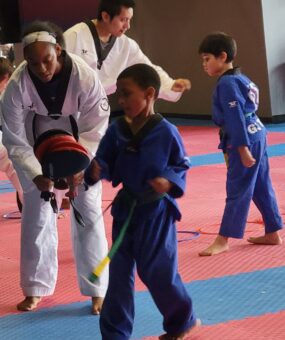
- Partner Drills and Group Training: TaeKwonDo often involves working with partners and teams, enhancing interpersonal skills and the ability to work collaboratively.
- Instructor Roles: Advanced students often take on mentoring roles, developing their ability to communicate effectively and guide others.
7. Ethics and Responsibility
- Moral Code: TaeKwonDo emphasizes a moral code that includes integrity, perseverance, and respect, fostering ethical behavior.
- Role Modeling: Practitioners, especially advanced ones, are expected to set an example for others, understanding the responsibility that comes with leadership.
8. Conflict Resolution
- Non-Violent Principles: While TaeKwonDo is a martial art, it teaches non-violent conflict resolution and the importance of avoiding unnecessary confrontation.
- Calmness Under Pressure: The ability to remain calm and composed during sparring translates to managing conflicts effectively in other areas of life.
Practical Examples
- Leadership in Training: Senior students often lead warm-ups, drills, and even classes, practicing leadership in a real-world setting.
- Community Involvement: Many TaeKwonDo schools participate in community events and service, giving students opportunities to lead projects and engage with the community.
Conclusion
TaeKwonDo provides a comprehensive framework for developing a range of leadership skills. Through its physical, mental, and ethical training components, practitioners learn discipline, confidence, respect, goal setting, decision making, teamwork, ethics, and conflict resolution. These attributes collectively contribute to shaping effective and inspiring leaders both on and off the mat.
If you want to know more about our programs click on LEADERSHIP!