
Taekwondo and Accountability – G3 America TaeKwonDo
Taekwondo promotes accountability in several ways, emphasizing personal responsibility, discipline, and respect both inside and outside the dojo. Here are some key aspects:
1. Structured Environment
Clear Rules and Expectations: Taekwondo classes are structured with clear rules and expectations. Students learn to follow these guidelines, which instills a sense of responsibility and accountability for their actions.
Regular Attendance: Consistent participation is expected. Students are held accountable for their attendance, fostering a sense of commitment and responsibility.
2. Goal Setting and Achievement
Belt System: The progression through different belt levels requires setting goals and working consistently to achieve them. Students are accountable for their progress and must demonstrate their skills and knowledge to advance.
Personal Goals: Beyond belts, students set personal goals for improving specific techniques or physical fitness, learning to hold themselves accountable for their own progress.
3. Self-Discipline
Training Routines: Regular practice and adherence to training routines teach self-discipline. Students learn to manage their time and efforts effectively, holding themselves accountable for their practice outside of class.
Behavioral Expectations: Respect, focus, and self-control are core values. Students are accountable for their behavior, both in and out of the dojo, reflecting the discipline learned through Taekwondo.
4. Instructor and Peer Accountability
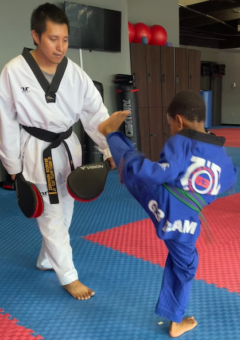
Feedback and Corrections: Instructors provide feedback and corrections, holding students accountable for their performance and encouraging continuous improvement.
Peer Support: Training with partners fosters mutual accountability. Students support each other’s progress and adhere to safety and respect guidelines during practice.
 5. Ethical and Moral Teachings
Tenets of Taekwondo: The principles of courtesy, integrity, perseverance, self-control, and indomitable spirit are emphasized. Students are encouraged to embody these values, holding themselves accountable for their actions in daily life.
Role Models: Instructors and senior students serve as role models, demonstrating accountability and encouraging others to follow suit.
6. Reflection and Self-Evaluation
Regular Self-Assessment: Students are encouraged to reflect on their progress and areas for improvement, fostering a habit of self-evaluation and personal accountability.
Feedback Loops: The process of receiving feedback and making adjustments promotes a continuous cycle of improvement and accountability.
7. Community and Responsibility
Team Spirit: Being part of a Taekwondo community fosters a sense of belonging and mutual responsibility. Students are accountable to their peers and instructors, contributing to a positive and supportive training environment.
Service and Leadership: Advanced students often take on leadership roles, teaching and mentoring others, which reinforces their own accountability and responsibility.
By integrating these elements, Taekwondo cultivates an environment where accountability is a natural and integral part of the practice, extending beyond the dojo into all areas of a student’s life.
If you want to know more about our programs click on Accountability!